ONE SEMESTER OF FREE STUDY AT A TOP EUROPEAN UNIVERSITY!
16.09.2026
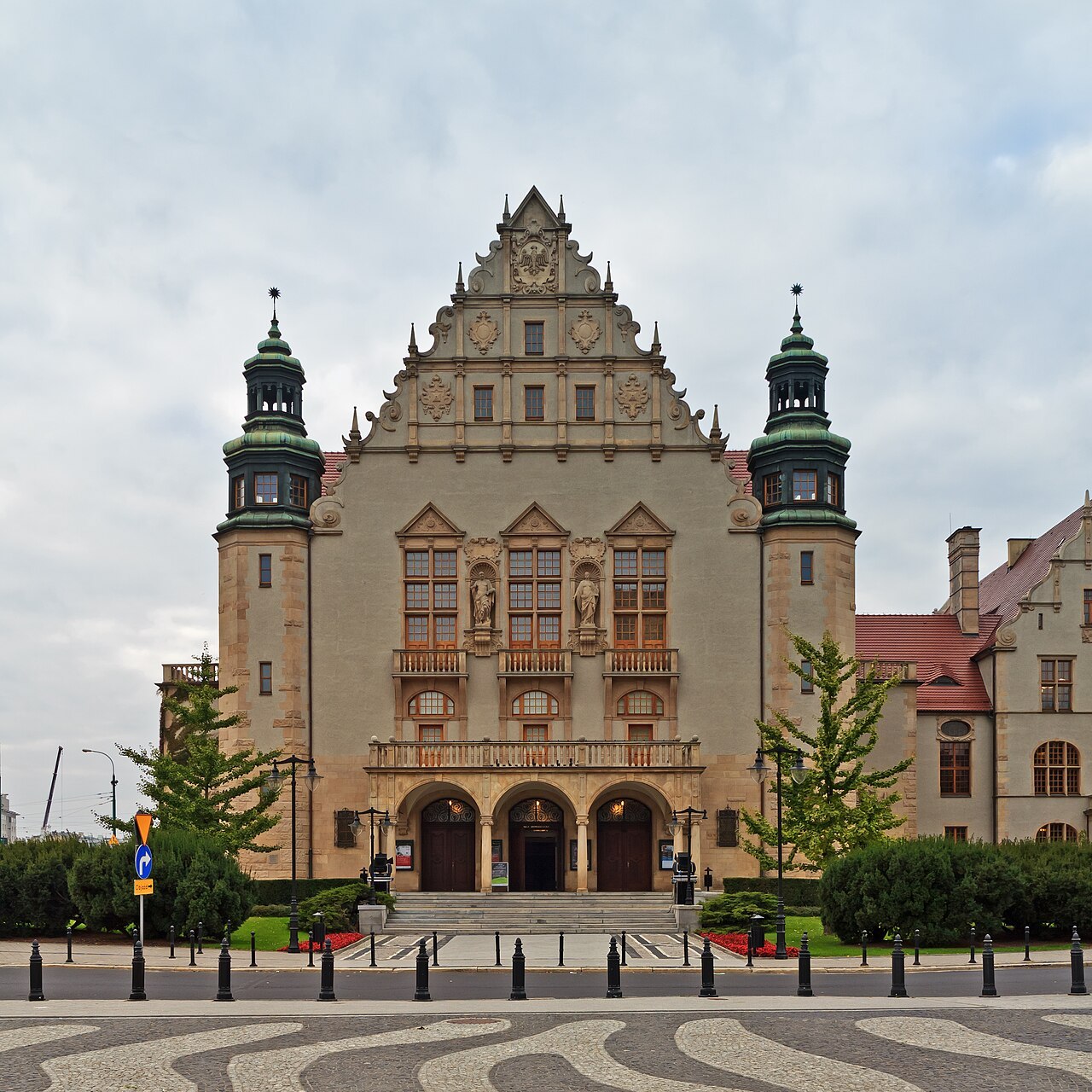
Another European opportunity is available for Kokand University students!
Applications are now open for the academic exchange programme at the prestigious Adam Mickiewicz University (AMU) in Poland for the Spring Semester of the 2026–2027 academic year.
🏰 Study location: Poznań, Poland (European Union)
📆 Study period: 24 February 2026 – 4 July 2027
📚 AVAILABLE FIELDS OF STUDY:
• Computer Engineering
• Cybersecurity
• English Philology
• Primary Education
• Preschool Education
✨ WHAT DOES THE PROGRAMME OFFER?
✅ 100% tuition fee waiver under the inter-university Memorandum of Understanding (MoU)
✅ An opportunity to experience the advanced European education system
✅ An international academic and cultural environment within the Schengen Area
✅ International experience and a certificate that can provide valuable added value to your CV
🗂 REQUIRED DOCUMENTS:
- 📄 Copy of a valid international passport
- 📊 Academic Transcript
- 🌐 Proof of English proficiency — IELTS B2 / Medium of Instruction (MOI) confirmation letter
- 📄 Recommendation letter from the Dean's Office
⚠️ IMPORTANT: In accordance with the bilateral agreement, the number of places is strictly limited. Prepare your documents in advance to participate in the selection process.
❗️Application deadline: 20 October
✅ REGISTER NOW 👇
A NEW UNIFIED PROCEDURE FOR INTERNATIONAL MOBILITY AND EXCHANGE HAS BEEN INTRODUCED AT KOKAND UNIVERSITY
Dear professors and lecturers, staff members, researchers, and students of Kokand University,
In order to further systematize and ensure a more transparent and fair organization of international cooperation and academic mobility processes at Kokand University, the “Regulation on Academic Mobility” has been adopted.
The Regulation has been approved by the University Council and establishes a unified procedure for organizing international exchange and academic mobility activities at the University. The Regulation is mandatory for the relevant structural units of the University and all individuals participating in these processes.
Starting from the 2026–2027 academic year, the participation of Kokand University students, professors and lecturers, research staff, researchers, and other employees in the following international activities shall be carried out in accordance with the unified procedures and requirements established by the Regulation:
🎓 academic mobility
🌍 international exchange
📚 professional development
💼 internships
🔬 research and research projects
🎤 international conferences and academic events
☀️ summer and winter schools
🤝 joint educational programmes and other international activities
HOW ARE CANDIDATES EVALUATED?
At Kokand University, candidates for international academic mobility and exchange programmes are selected using a 100-point system, based on clearly defined criteria established for each relevant category of participants.
FOR BACHELOR’S STUDENTS — 100 POINTS
| No. | Evaluation criterion | Maximum points | Evaluation source |
|---|---|---|---|
| 1 | Academic performance (GPA) | 30 points | Transcript |
| 2 | Foreign language proficiency | 25 points | Certificate / test |
| 3 | Academic activity — research and methodological work, competitions, grants | 15 points | Documents / certificates |
| 4 | Non-academic activity — community engagement, volunteering, organizational activities | 15 points | Documents / recommendation |
| 5 | Outstanding talents and achievements — sports, arts, creative activities, and other fields | 10 points | Diploma / certificate |
| 6 | Motivation letter and interview performance | 5 points | Commission assessment |
| TOTAL | 100 POINTS |
Note 1: In some cases, the terms and conditions of a grant or exchange agreement may include additional requirements. Compliance with such additional requirements shall be considered a priority obligation and shall not be included in the point-based evaluation system.
Note 2: Travel may be financed in four ways: through a grant, by the University, at the participant’s own expense, or through mixed financing. A commission may be established to make decisions regarding internal financing.
FOR MASTER’S STUDENTS — 100 POINTS
| No. | Evaluation criterion | Maximum points | Evaluation source |
|---|---|---|---|
| 1 | Academic performance (GPA) | 30 points | Transcript |
| 2 | Foreign language proficiency | 25 points | Certificate / test |
| 3 | Academic activity — research and methodological work, competitions, grants | 25 points | Documents / certificates |
| 4 | Non-academic activity — community engagement, volunteering, organizational activities | 10 points | Documents / recommendation |
| 5 | Outstanding talents and achievements — sports, arts, creative activities, and other fields | 5 points | Diploma / certificate |
| 6 | Motivation letter and interview performance | 5 points | Commission assessment |
| TOTAL | 100 POINTS |
Note 1: In some cases, the terms and conditions of a grant or exchange agreement may include additional requirements. Compliance with such additional requirements shall be considered a priority obligation and shall not be included in the point-based evaluation system.
Note 2: Travel may be financed in four ways: through a grant, by the University, at the participant’s own expense, or through mixed financing. A commission may be established to make decisions regarding internal financing.
FOR RESEARCHERS (PhD STUDENTS) — 100 POINTS
| No. | Evaluation criterion | Maximum points | Evaluation source |
|---|---|---|---|
| 1 | Foreign language proficiency | 20 points | Certificate / test |
| 2 | Scientific publications, including articles in internationally indexed journals | 35 points | List of publications |
| 3 | Level of participation in grants and research projects | 20 points | Project documentation |
| 4 | Supervisor’s recommendation and relevance to the research topic | 15 points | Recommendation |
| 5 | Additional criteria / commission assessment | 10 points | Commission documents |
| TOTAL | 100 POINTS |
Note 1: In some cases, the terms and conditions of a grant or exchange agreement may include additional requirements. Compliance with such additional requirements shall be considered a priority obligation and shall not be included in the point-based evaluation system.
Note 2: Travel may be financed in four ways: through a grant, by the University, at the participant’s own expense, or through mixed financing. A commission may be established to make decisions regarding internal financing.
FOR PROFESSORS, LECTURERS AND RESEARCH STAFF — 100 POINTS
| No. | Evaluation criterion | Maximum points | Evaluation source |
|---|---|---|---|
| 1 | Foreign language proficiency | 20 points | Certificate / test |
| 2 | Scientific achievements — international/local publications, monographs, patents, etc. | 25 points | Publication list / relevant documents |
| 3 | Level of participation in grants and research projects | 20 points | Project documentation |
| 4 | KPI performance — points earned during the latest evaluation period | 20 points | KPI report |
| 5 | Activity in academic and research activities — conferences, organizational activities, etc. | 10 points | Certificates / documents |
| 6 | Recommendation from the department/faculty and interview performance | 5 points | Recommendation / commission assessment |
| TOTAL | 100 POINTS |
Note 1: In some cases, the terms and conditions of a grant or exchange agreement may include additional requirements. Compliance with such additional requirements shall be considered a priority obligation and shall not be included in the point-based evaluation system.
Note 2: Travel may be financed in four ways: through a grant, by the University, at the participant’s own expense, or through mixed financing. A commission may be established to make decisions regarding internal financing.
HOW IS THE INTERNATIONAL MOBILITY PROCESS CARRIED OUT?
Stage 1: An announcement is published. Applicants can find detailed information at:
https://www.kokanduni.uz/uz/international-cooperation-relations/announcements
Stage 2: Submission of the application and required documents in accordance with the requirements specified in the announcement.
Stage 3: The International Cooperation Department conducts a preliminary review of the submitted documents.
Stage 4: A special commission established by an official order evaluates the candidates and conducts interviews. The results are approved and documented in official minutes.
Stage 5: The final results (ranking) are announced.
Stage 6: The documents are forwarded to the next stage, after which the partner institution makes the final decision.
Stage 7: The relevant official order is issued.
Stage 8: Preparation for the trip.
Stage 9: Participation in international mobility.
Stage 10: Monitoring.
Stage 11: A seminar is organized at Kokand University and a final report is prepared.
Stage 12: The experience gained is integrated into the University’s activities.